
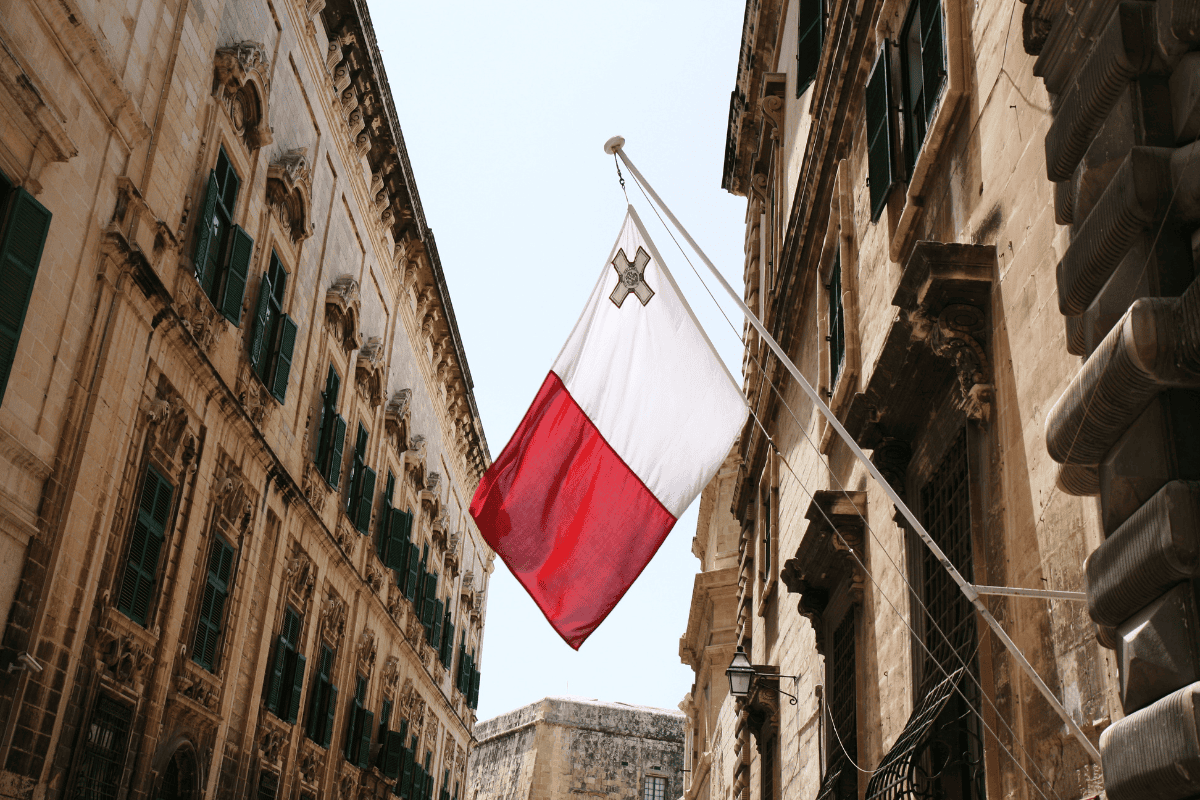
Malta is a small island nation located in the Mediterranean Sea that has a rich history spanning thousands of years.
This blog post will explore the History of Malta, from its earliest inhabitants to the present day. Through the exploration of ten major events, we will gain a better understanding of the nation’s past and how it came to be what it is today. So, let’s take a look back and see how the History of Malta has been shaped over the centuries.

1) Prehistory
The earliest evidence of human settlement in Malta dates back to around 5200 BC when the first Neolithic people arrived. By 3500 BC, a more sophisticated form of civilisation had established itself in the form of the Għar Dalam phase, with fortified villages, stone tools and pottery making up the culture.
By the year 3000 BCE, the introduction of farming to the island ushered in the Bronze Age. During this period, the inhabitants began to develop more intricate forms of pottery, sculpture, and stonework. The oldest known free-standing temples in the world, the Ġgantija temples, date back to this period.
At around 1500 BC, Malta entered the Iron Age when weapons made of iron replaced those made of bronze. During this time, Malta saw the flourishing of towns and increased interactions with other cultures, and Maltese writing started to appear. It was during this period that the Phoenicians occupied the island, building Melite (which is now Mdina) as a commercial hub.
By the 6th century BC, the Maltese islands had become part of the Carthaginian Empire and this lasted until the Romans took control in 218 BC. From then on, Malta would experience a long history of foreign rule which would shape its culture for many years to come.
2) The Phoenicians
The first inhabitants of Malta were the Phoenicians, an ancient civilisation that flourished in the Mediterranean region during the first millennium BC. It is estimated that the Phoenicians settled on Malta’s shores around 1000 BC, constructing trading posts and introducing their language, religion and culture. Even today, evidence of their influence can be found in the island’s cities.
The Phoenicians were well-known for their trading skills, often travelling great distances to exchange goods and services with distant lands. Their strong navy enabled them to establish control over much of the Mediterranean Sea, with their earliest settlement in Malta founded in the 6th century BC. Over time, the settlement grew and developed further.
Malta still displays traces of the Phoenicians’ impact, from the remnants of ancient edifices to archaeological finds. Among the objects left behind by these maritime traders are items of pottery, jewelry, and other artifacts. Even today, some Maltese citizens still speak the Phoenician tongue.
Although much of their culture and language has been lost over time, the influence of the Phoenicians remains evident in Malta. Their influence has helped shape the culture, language, architecture and history of this small island nation.
3) The Carthaginians
The Carthaginians were a North African civilisation that dominated the Mediterranean in the first millennium BC. They arrived in Malta around 500BC, where they quickly took control and established a strong base of trade. To ensure their ships’ security, they constructed a fortress on the minuscule island of Malta as a barrier against enemy armadas.
The Carthaginians introduced new farming techniques to the island, including terracing and the use of olive trees for irrigation. They also brought with them many of their gods and goddesses, most notably Tanit, the goddess of fertility. During this period, the Maltese adopted some of the Carthaginian ways and language, making it the ancestor of the modern Maltese language. After a lengthy struggle, the Romans emerged victorious over the Carthaginians in 241 BC. Even now, remnants of the Carthaginian presence are discernible on the island of Malta.
4) The Romans
The Romans arrived in Malta in 218BC and set about to conquer the island. In 60AD, Malta underwent a religious conversion after Publius, the Apostle of Jesus Christ, was stranded there due to a shipwreck. The Romans remained in Malta for around 200 years, during which time they built an impressive infrastructure of roads and fortifications. During this period, the island became a vital trading hub with many ships travelling between Italy and Africa.
In the 5th century, the Vandals descended on Malta, pillaging it. The Byzantine army brought the short-lived incursion of Malta to a swift end, leading to it becoming a part of their rule until 870AD. That’s when the Arabs invaded, taking over the nation and using it to construct the picturesque Mdina – which remains the nation’s capital to this day.
5) The Byzantines
Malta was deeply affected by the creation of the Byzantine Empire in the 5th century. The Byzantines were responsible for the construction of many churches and other buildings which are still standing today. In 870, Admiral Nicetas invaded Malta and established Byzantine rule. During its tenure as a part of the Empire, Malta was called Melite, ending in 1091. They also improved the island’s agricultural methods and introduced a system of tax collection. During the Byzantine era, protective walls were erected around the island. The walls of Mdina being among them. In 1091, the Normans took control of Malta from the Byzantines and brought with them a new era of Christianity.
6) The Arabs
In 870 AD, Malta was invaded by the Arabs, who were part of the Umayyad Caliphate. During their rule, they were responsible for introducing many new agricultural methods and practices. They also introduced a great variety of new plants, including oranges, lemons, olives, melons, apricots, and carobs. The Arabs also brought with them Islam, which quickly became the main religion of Malta. The Arab occupation of Malta lasted for approximately 170 years. During this era, the isle was recognised as “Malta al-Gharb”, implying “Malta of the West”.
Ever since the decline of Arab rule, the Mediterranean island of Malta has retained its official title of “Malta”. In 1091, the island fell under the jurisdiction of the Byzantine Empire and was then conquered by the Normans.
7) The Normans
The Normans arrived in Malta in 1091, and took control of the island with relative ease. Under the rule of the Norman King Roger II of Sicily, Malta flourished. The Normans built a new city named Mdina, which became the capital of Malta, and they also developed fortifications in the area. The Normans introduced Christianity to the island, and the newly established Roman Catholic faith quickly became the main religion of Malta.
During this period, Malta’s economy began to grow due to its strategic location in the Mediterranean Sea. The Normans encouraged trade with other countries, allowing Maltese merchants to travel as far as North Africa and even Constantinople.
The Normans also brought with them a new language: Siculo-Norman (a mix of Sicilian, Latin and French). This was used by the nobility and eventually replaced the Arabic language as the official language of Malta.
The Normans eventually lost control of Malta in 1249, when it fell to the Angevin rulers from Naples. Despite this, their influence is still visible in modern-day Malta, from the architecture to the language spoken.
8) The Knights Hospitaller
In the 11th century, the Knights Hospitaller emerged as a religious and military order devoted to offering aid and safeguarding Christian pilgrims travelling to the Holy Land. In the 12th century, they expanded their mission and began to offer assistance to Christians throughout Europe. They also began to take an active role in protecting Christian lands from Muslim invaders.
In 1530, they were granted control of the island of Malta by Charles V of Spain. This marked the start of their rule in Malta, which lasted until 1798. During this period, the knights constructed several fortresses and fortified cities across Malta and Gozo, transforming the islands into one of the most heavily defended areas in Europe at the time.
Their presence in Malta was eventually ended by Napoleon Bonaparte, who invaded the island in 1798 and forced them out. However, their legacy remains, with many of the fortresses and cities built by the knights still standing today. These sites are now considered some of Malta’s most important tourist attractions and cultural landmarks.
9) The French
The French took over Malta in 1798, during the Napoleonic Wars. They remained in control for two years, until the British recaptured the island in 1800. During this time, the French made a number of improvements to the infrastructure and established the first newspapers on the island. The French also implemented the first public health system and founded the University of Malta. When the French attempted to take control of Malta, their occupation was challenged by the native Maltese, who favoured British rule. Even after the British had secured their authority, the effects of French colonisation were still detectable in many areas, such as language, architecture, and culture.
10) The British
The British Empire was a major force in the 19th century, and its influence over Malta was no exception. As part of the Treaty of Amiens in 1800, Malta was given to the British. Officially becoming a crown colony in 1813. During this time, Malta had a very strategic importance as it served as a supply base and repair station for the Royal Navy, and was a key stepping stone between Britain and its empire in the Middle East.
The British greatly improved the infrastructure on the island, introducing a railway network and post offices. The British also granted the Maltese people a constitution in 1849, granting them greater autonomy.
During World War II, Malta endured an occupation by Axis powers. This spanned from 1940 until 1943. Under British rule, the islanders endured heavy aerial bombardment and food shortages, as well as economic depression. However, with Allied support, Malta held off its attackers and earned the distinction of being “the most bombed place on earth” during the war.
Following the war, Malta achieved full independence in 1964 and remains an important member of the Commonwealth of Nations. The country is now a prosperous republic, boasting a high quality of life, and the island has become a popular tourist destination in recent years.
Traveling to Malta
Malta has a rich history with many different cultures having left their mark on the islands. From the prehistoric settlements that formed the Maltese archipelago. To the present day which is characterised by tourism and international finance. Malta has come a long way in its history.
The country is an attractive destination for expats, offering a relaxed Mediterranean lifestyle. English as an official language, and a very low cost of living. With its breathtaking landscapes, rich cultural heritage and friendly locals, it’s easy to see why Malta is an increasingly popular destination for those looking to move abroad. If you want to travel to Malta then why not contact RHJ Law to see how we can help you on your journey.